
Customer Engagement
The Stories Machines Trust: A Conversation with Bianca Del Vecchio

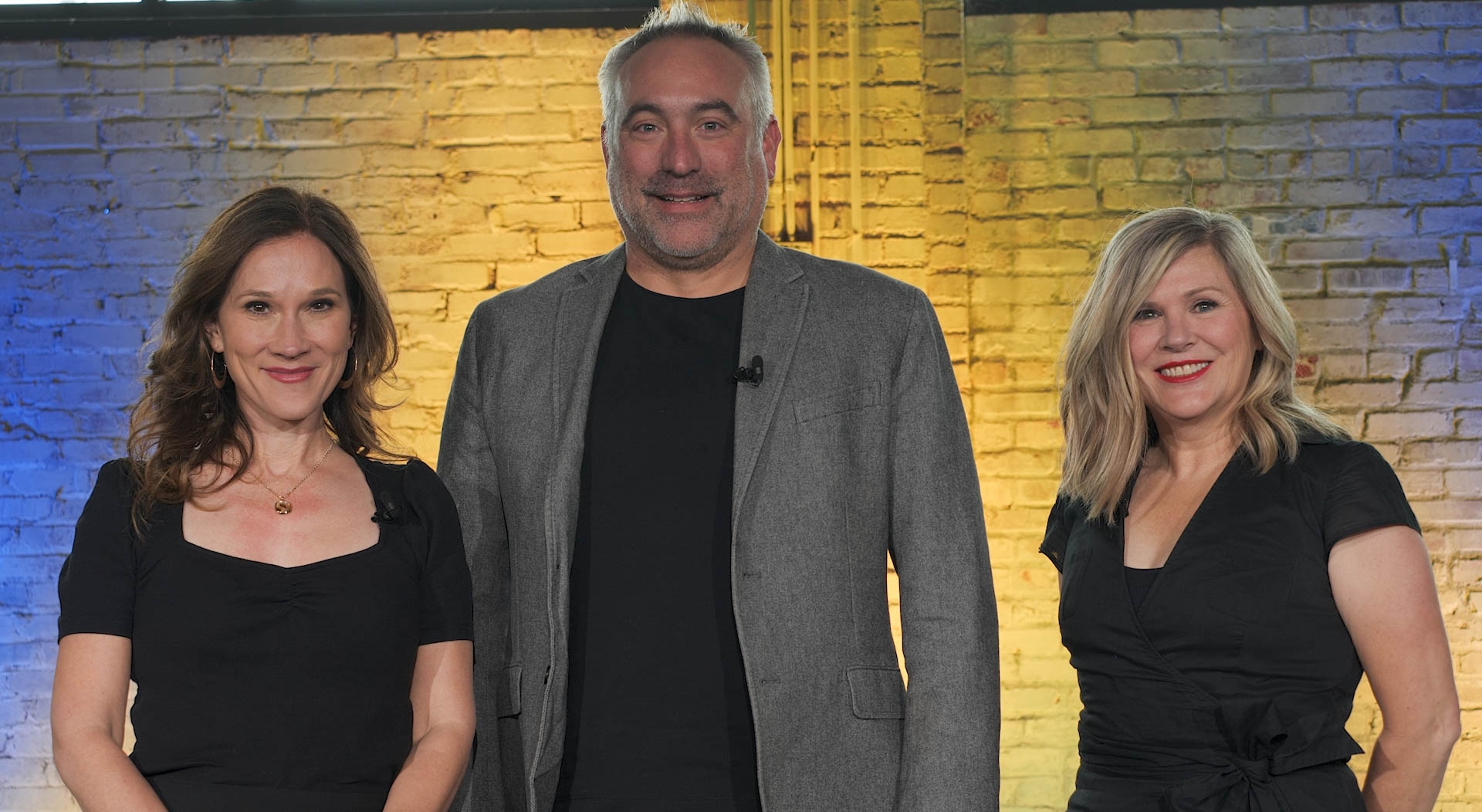
Earlier this year, Spotlight welcomed Captivate Collective, and Bianca Del Vecchio along with it, into the fold. At Spotlight's On the Road event in Chicago, Spotlight's John "Rocky" Rockhold sat down with Bianca for a fireside chat on a topic she's spent over a decade building her career around: customer advocacy. The conversation covered how the discipline is evolving in the age of AI, why analyst relations and advocacy are converging, and what it actually looks like to practice "precision advocacy" in 2026.
Below is an edited Q&A from that conversation.
Q: You've spent 10 years in the customer advocacy space. It sounds like a simple concept, but of course it's not. What is it, and is it changing in this era of everything-is-changing?
I started in customer storytelling: case studies, videos, showing buyers what's actually possible with technology. That work hasn't gone anywhere. We still need storytelling. What's changed is the context around it, and where it shows up.
The old question was how do we break through the noise?
The new question is how do we show up in the answer?
And the numbers back this up. 94% of B2B buyers use generative AI somewhere in their journey. Half of them start there, before they've talked to a single vendor. So by the time someone reaches out, their shortlist is already built. AI did the synthesizing before your sales team ever got a seat at the table. Four out of five deals go to whoever the buyer contacts first, because that "favorite" was decided in their own research, long before a seller entered the picture.
That's exactly why customer voice matters so much right now.
It's the classic owned versus earned tension: what you say about yourself will always have its place, but what your customers, analysts, and peers say about you when you're not in the room now carries more weight than ever. Analysts start their research with your customers. LLMs eat what your customers create. Authentic advocacy isn't a nice-to-have anymore. It's a real competitive moat.
Q: What's your perspective on the worlds of AR (analyst relations) and advocacy coming together, and why does that make sense now?
It all comes back to trust. Analysts and customers are both critical pillars of trust in the market. Analysts shape expert perception. Customers provide peer proof. And both your buyers and AI are drawing from those same sources to form an opinion.
That's the whole idea behind influence orchestration. It's not about running an analyst program and a customer program as two separate initiatives. They're feeding the same engine. Keep them siloed, and you get fragmented signals. Align them, and you get one coherent, credible narrative that shows up everywhere your buyers are looking.
And AI has made the cost of misalignment visible in a way it never was before. You can literally see it in how your company gets positioned in LLM outputs. Whichever side of the house you sit on, analyst or customer, you're in the business of building and deploying trust. The unlock is pointing all of it in the same direction.
Q: Some people say, "We have reviews, we're active on G2, we do references — isn't that enough?"
It's a start. But activity isn't alignment. If you're just cycling through review requests every quarter to hit a report deadline, that's a transaction. And transactions run out. Eventually you burn through the list of customers willing to engage.
Volume isn't the goal here. A review that doesn't reinforce your actual narrative is noise, not signal. And if G2, your references, and your analyst program are all telling different stories, AI won't smooth that out. It'll just amplify the contradiction.
Don’t just ask "are we doing advocacy?" Ask "is it actually working?" Are you showing up in AI outputs? Reinforcing the themes your analysts care about? Reaching the right channels? That means stepping back, auditing how you show up today, and getting clear on the narrative you want to own.
Q: What does "precision advocacy" actually mean, and what does it look like in practice?
Advocacy's gone through waves over the last 20 years. It started as reactive reference programs. Then it scaled into broad advocacy programs. Now, it's evolved into lifecycle advocacy, baked into key moments of the customer journey. Precision advocacy is the next wave.
And "precision" is critical here. This isn't about more proof. It's about the right proof, in the right channels, with the right narrative, at the right volume. In practice: know what AI tools your buyers actually use, audit how you and your competitors show up in those engines, map what content is getting pulled into AI answers and where the gaps are, then fill those gaps with surgical, targeted advocacy.
Do that well, and advocacy stops being just an execution engine (“how many assets did we ship this quarter?”) and becomes a measurable influence driver you can tie to pipeline and win/loss.
Start by taking stock of every channel where your customer voice lives, and ask if it's actually accessible to LLMs. Gated content doesn't count; even a great testimonial won't help if the AI can't reach it. This matters most if you're building a brand-new category with no existing analyst coverage: your earliest customers become the proof point that the category is real.
Q: What does the future of this practice look like, and what's the one thing you want people to walk away ready to do?
Trust has always been the currency. Word of mouth, peer recommendation, expert validation. That part hasn't changed. What's changed is where trust lives and how it gets synthesized. There's a machine in the middle now. Answer engines are pulling from every trust signal you've ever built and turning it into a recommendation before a buyer ever talks to you.
Your job in customer engagement is to bridge the customer voice and that machine. Ask yourself: is your customer engine feeding it the right signals, in the right places, at the right volume? Whether you work in AR or in advocacy, you're part of the trust infrastructure that decides how your company gets found, evaluated, and chosen.
So find your allies. If you're in analyst relations, go find whoever owns customer engagement at your company (or vice versa) and start with a shared problem. A great opener: "Here's what AI says about us. Does that match what we actually intend?" That one question tends to open every door after it. And don't lose the human piece in all this: people connect with stories, not statistics, and it turns out AI is looking for the same signal. The stories that stick, for a person or a model, are the ones that show how technology made someone's actual day-to-day easier. That's still the nugget worth chasing, no matter how sophisticated the tools get.
Related Insights
Read More
Analyst Relations